Tierra Maya
Sanctuary of Living Traditions
Step off the ship and into the jungle.
A hands-on journey through Mayan food, honey, and ritual.
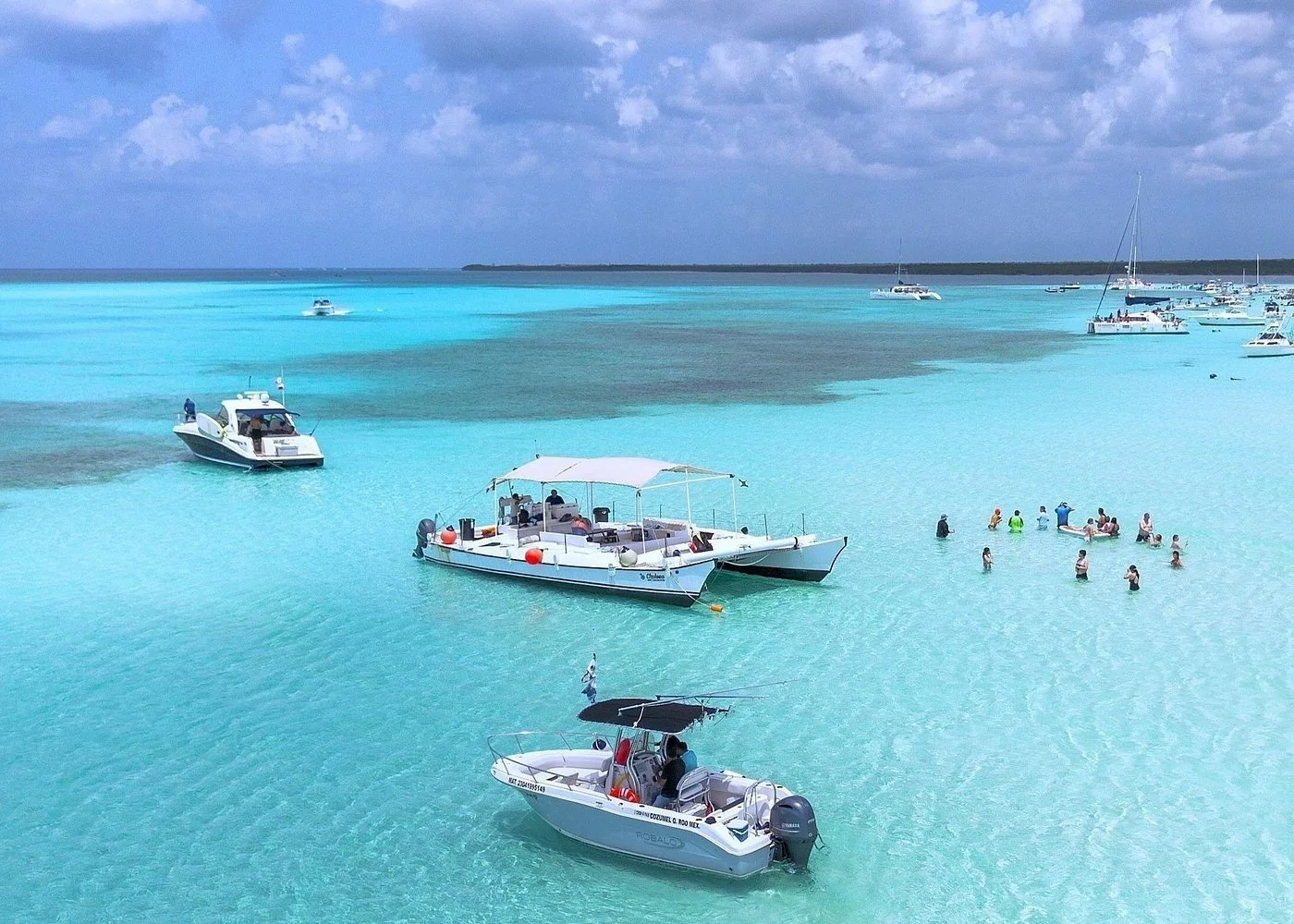
Most people come to Cozumel for the beach.
And that's great — the water here is ridiculous. That blue doesn't even look real. But there's something else here. Something worth discovering. A small cultural preserve on the way to the other side of the island, about fifteen minutes from the cruise port.
We keep our groups small on purpose. Not because we have to — because we want to know your name, adjust to your pace, and make sure you actually learn something. This isn't a conveyor belt. When you're here, we're here with you.
We're not a tourist stop for every guest on the island — and we're okay with that. We built this for a specific kind of traveler: the one who's already done the beach, who doesn't need another bar crawl, who's been to Cozumel before and wants to discover what's actually behind it.
Our guides are young, fun, and genuinely passionate about Mayan culture. They're here to teach you something real — not to read from a script. We won't try to sell you anything (tequila, liqueurs — okay, we do have them, and they taste amazing). But that's not why you're here. You're here for the hands-on experience: grinding cacao, pressing tortillas, meeting sacred bees. That's what you're paying for.
And the reason we charge what we charge? Because we try to be fair with every single person in our supply chain. Everything we use is local. The fruits and vegetables come from Cozumel — we buy them from el Güero at the mercado, the same spot where locals shop. The tortilla dough comes from the same place Cozumel families buy theirs, and we think it's the best on the island (even though everyone has their favorite spot). The cacao is shipped from Mérida. The stone tools come from small artisan towns near there, too.
Our liqueurs are artisanal — from cacao to chocolate and mazapán — handpicked from producers we trust. The tequila we serve carries QR codes and meets every standard set by the Mexican government. We know how it feels to pay for tequila that isn't really tequila. That won't happen here. The whole chain — from ingredient to table — has been carefully selected to match the quality we'd expect ourselves.
You'll leave with something you weren't expecting — and the feeling that you actually connected to something real...
What happens when you arrive
Approximately 2 hours · Living Traditions experience
Total: approximately 2 hours.
You'll be back at the cruise port with time to spare.
The Experience
Four Hands-On Stations in the Jungle
You won't watch from a distance. You'll grind, roast, press, taste, and create — using tools unchanged for centuries.


Ceremonial Cacao
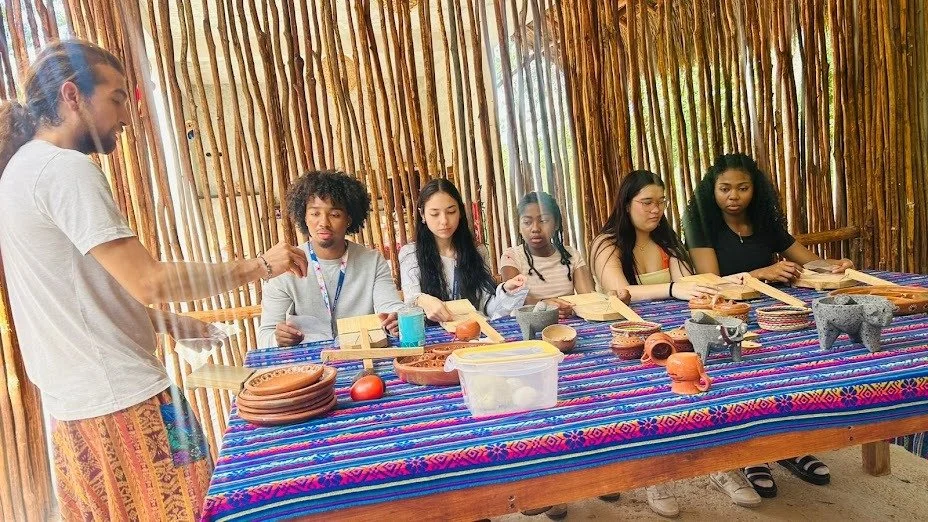
Your guide, Joel, opens with a short traditional blessing to set the mood. Then you sit at a stone table and grind real cacao beans by hand using a volcanic stone tool — the same way the Maya did it over a thousand years ago. You mix in local honey, a pinch of chili, and cinnamon, and you drink the chocolate you just made. It tastes nothing like store-bought chocolate — rich, earthy, and slightly spicy.
Guest favorite — "this changed how I think about chocolate"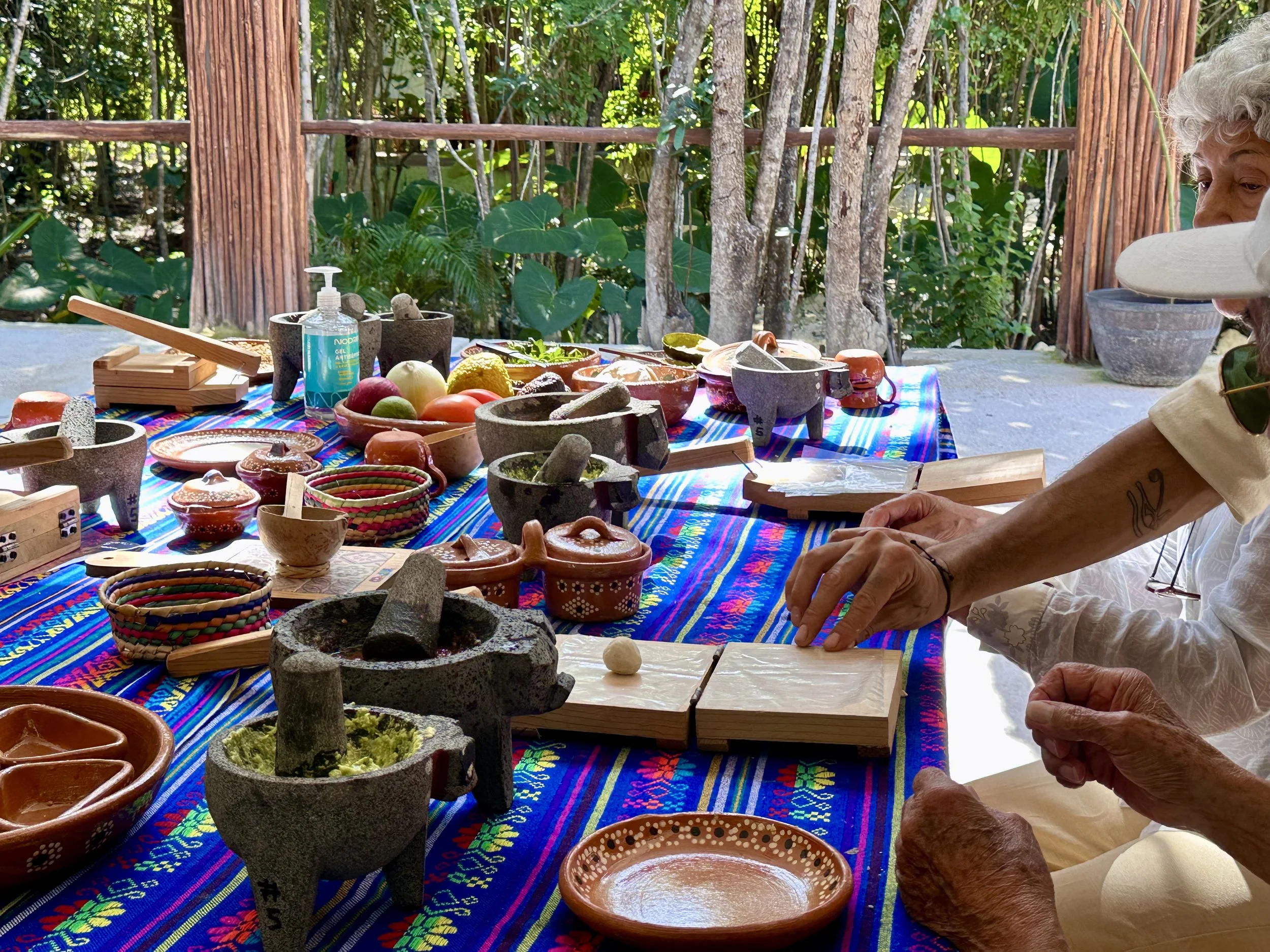
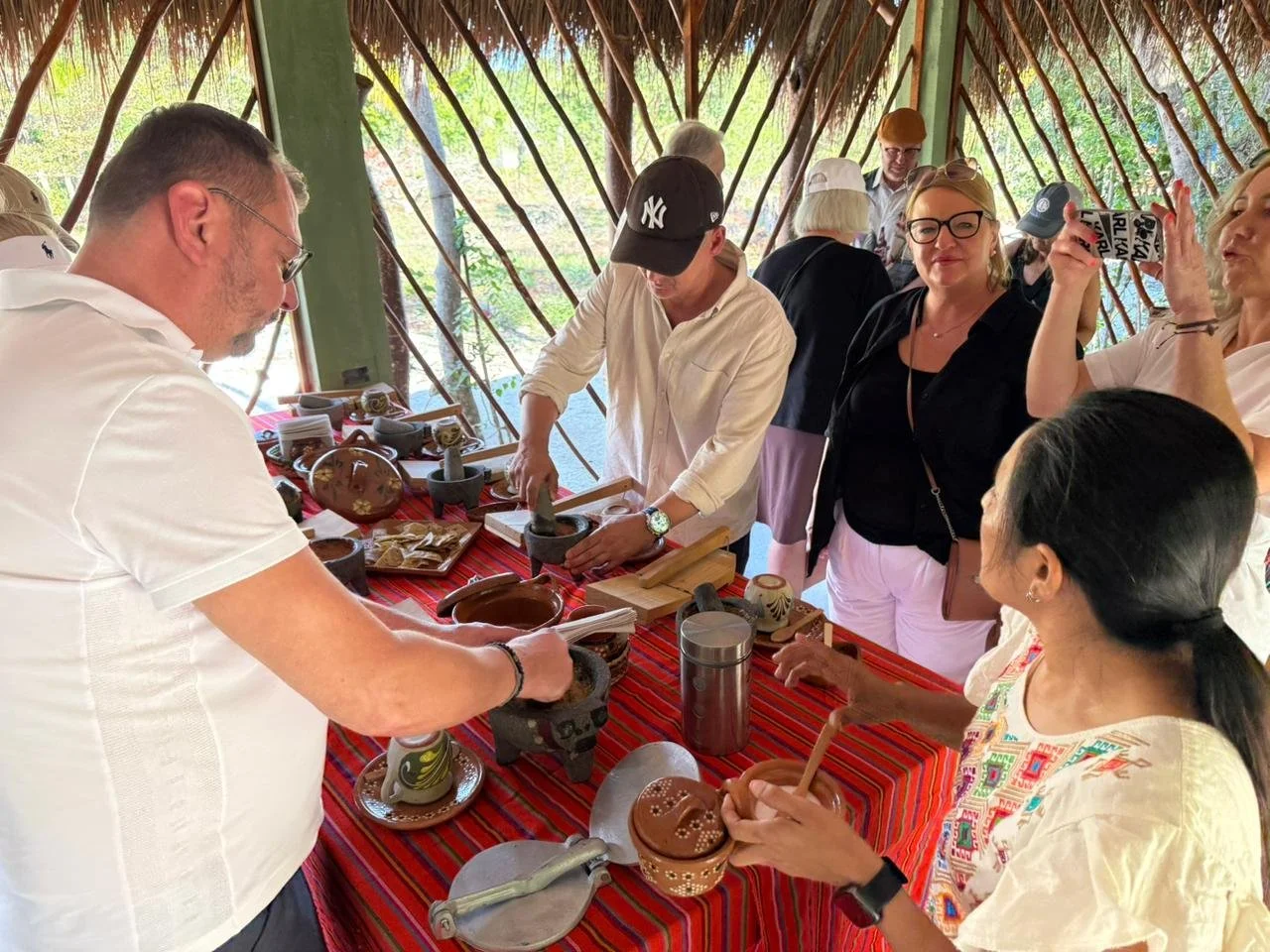
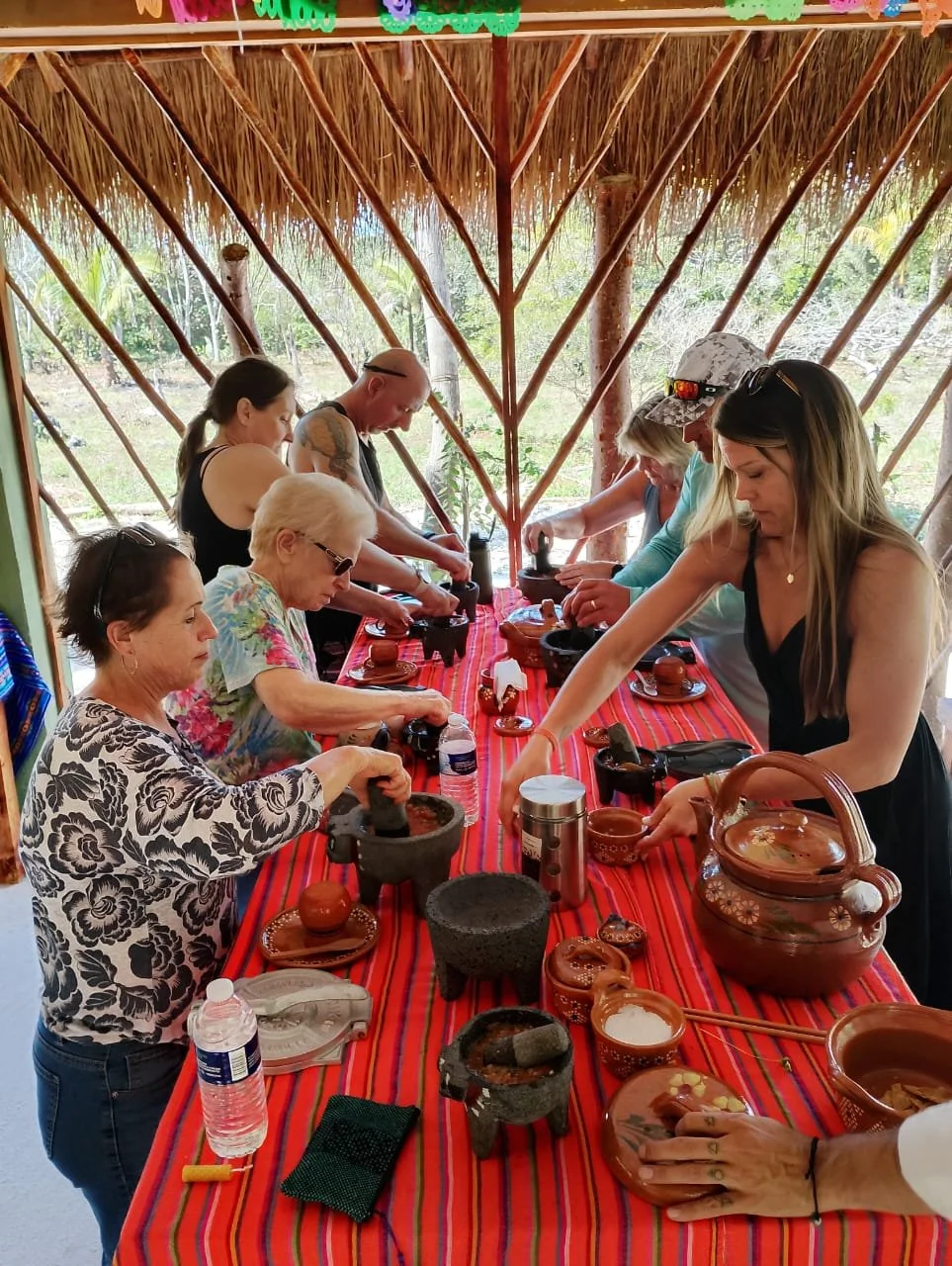

Zik'il P'aak — Salsa & Tortillas
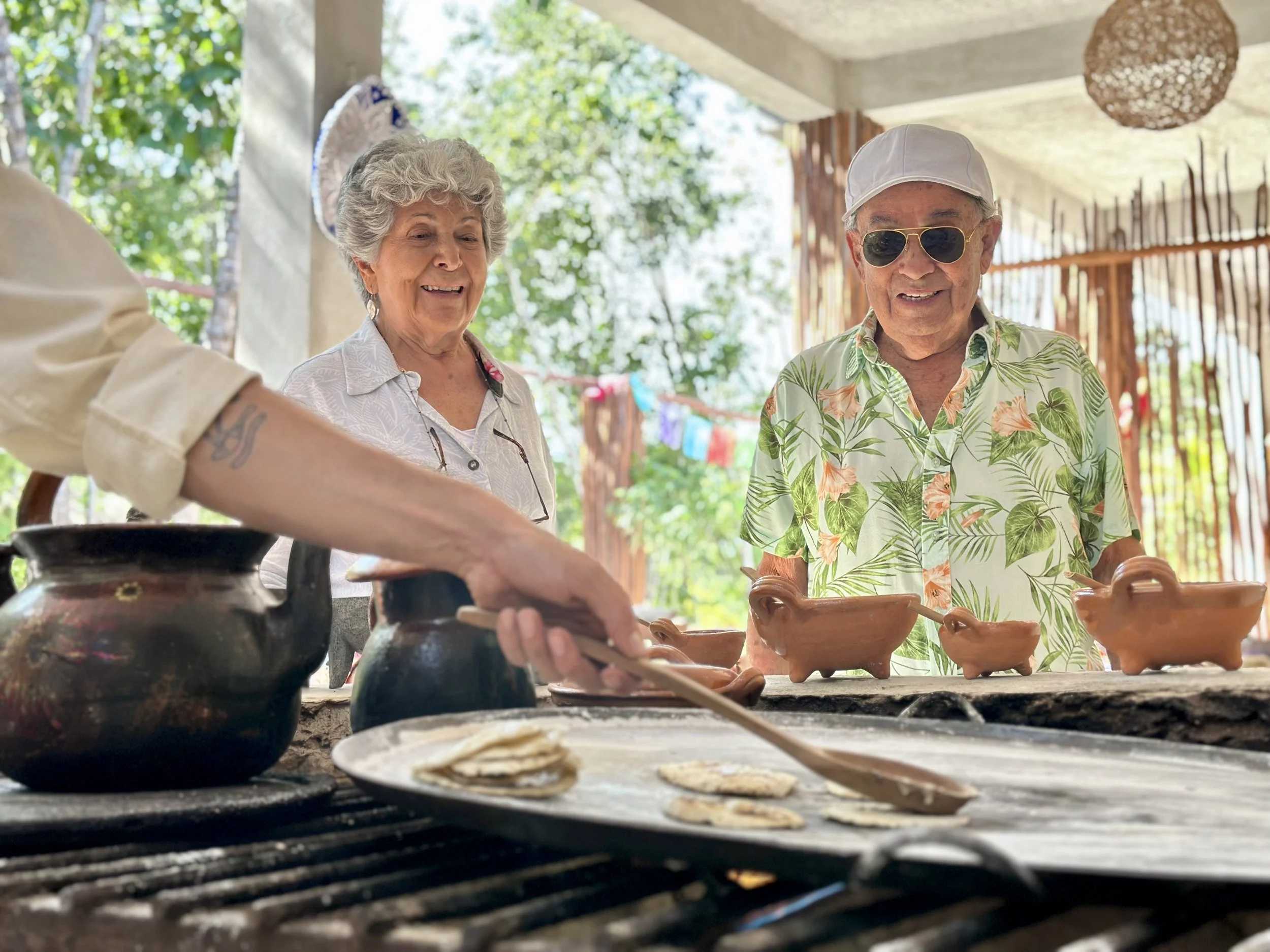
You roast tomatoes and spices over an open fire, then grind them by hand in a molcajete — a heavy stone bowl that works like a mortar and pestle. The salsa you make is called Zik'il P'aak, an ancient Mayan recipe with pumpkin seeds. Then you take a ball of fresh corn dough, press it flat into a tortilla with your hands, and cook it on a hot clay surface called a comal. You eat everything you just made. This is usually where everyone starts laughing and talking.
You make everything by hand — then eat what you made

Casa de la Abeja — House of the Bee
Your guide walks you to a quiet area in the jungle where we keep a colony of Melipona bees — a small, stingless species native to the Yucatan that the Maya have kept for over a thousand years. They don't sting, so you can get close. You'll learn what makes them different from regular honeybees, why they're endangered, and why the Maya considered them sacred.
Then you taste their honey — it's nothing like store-bought honey. Each variety has a different flavor depending on the flowers. After that, you sit down and mold your own beeswax candle by hand. You set an intention, and you take it home as a souvenir. It's a calm, quiet moment — one of the most memorable parts of the visit.
"The Maya believed stingless bees carried prayers to the gods. Their honey was medicine, offering, and sacred gift — never just food."


Viva Mexico
The final stop is relaxed. You sit down and taste a flight of artisanal tequila and locally made liqueurs — flavors like cacao, chocolate, coconut, and mazapán. Every bottle has a QR code and is fully certified. Your guide explains what you're tasting and where it comes from. It's not a party — it's a calm, adult way to close the experience. Children get a non-alcoholic juice pairing instead.
A calm way to end — no rush, no upsellOur Mission
What We Protect
Every visit keeps these traditions alive for the next generation.
The Recipes
Zik'il P'aak. Ceremonial cacao prepared the ancient way. Techniques that exist in the hands of fewer people every year.
The Tools
The metate. The molcajete. The tortilla press. The comal. Volcanic stone tools used for over 3,000 years. You'll use them yourself.
The Knowledge
How to grind cacao with intention. How to roast and crush salsa over open fire. How to press masa into tortillas. This isn't in books — it's passed person to person, hand to hand.
The Ritual
Our Ritual Leader holds the space with calm presence. This isn't a performance. It's a genuine moment of connection to the land and to tradition.
The Bees
We protect a small colony of Melipona — the sacred stingless bee. You'll taste their rare honey and create a beeswax candle to take home. A piece of light from the jungle.
"Conservation isn't something we talk about. It's something you taste, touch, and take home."
Choose Your Experience
All experiences are hands-on. No transportation included. Children under 12 are free.
You're Booked!
Your experience is confirmed. We've sent a confirmation to your email. Joel and the team are looking forward to welcoming you.
Message us on WhatsApp